Aberdeen Sleep Clinic
Sleep apnoea symptoms
Could you have sleep apnoea?
Obstructive sleep apnoea (OSA) is a condition where the throat repeatedly narrows or closes during sleep, causing breathing to pause (apnoea) or become shallow (hypopnoea). Your brain then 'jolts' you enough to breathe again. You might not fully wake up, but your sleep gets broken up again and again. That's why you can spend 8 hours in bed but still feel exhausted. Common signs of obstructive sleep apnoea include:
- Loud snoring (often most nights)
- Choking, gasping, or snorting sounds in sleep
- Breathing pauses noticed by someone else
- Waking with a dry mouth or sore throat
- Morning headaches
- Waking up a lot in the night
- Feeling very sleepy in the daytime
- Struggling to focus, feeling "foggy"
- High blood pressure
If any of this sounds familiar, it's sensible to get assessed at our sleep apnoea clinic in Aberdeen rather than guessing. You don't need all of these for it to be worth checking.

About our Aberdeen sleep apnoea clinic
How sleep apnoea risk is typically assessed
When you come through our sleep apnoea clinic in Aberdeen, we're looking for patterns, not just one symptom. We use validated screening tools (such as STOP-Bang and the Epworth Sleepiness Scale) and your clinical history to review risk in a simple, understandable way. The Epworth scale asks how likely you are to doze off in ordinary situations – in an afternoon meeting in Westhill, on the bus in from Bridge of Don, or on the sofa after work – because that kind of sleepiness is a stronger signal than simply feeling tired.
Lower risk
You may be lower risk if:
- you have few typical symptoms
- daytime sleepiness is not a major problem
- your screening score suggests a lower likelihood of OSA
What usually happens next
Receive practical guidance and advice on what to monitor.
Intermediate risk
You may be intermediate risk if:
- you have some symptoms, but the picture is mixed
- your screening score is in the middle range
- there may be overlap with insomnia, stress, or other causes
What usually happens next
Clinician review and a clear treatment plan if appropriate.
Higher risk
You may be higher risk if:
- there are witnessed breathing pauses, choking, or gasping
- snoring is loud and regular
- daytime sleepiness is significant
What usually happens next
Clinician review and a clear treatment plan if appropriate.
Importance of daytime sleepiness
Driving safety in Aberdeen
If you are very sleepy in the daytime, especially if you struggle to stay awake at the wheel, that's a safety issue, and if sleep apnoea is causing it, you must not drive and must tell the DVLA until it's treated. It makes no difference whether that's a long stretch on the A90, the stop-start crawl along Union Street, or ten minutes home to Bridge of Don – a few seconds of microsleep is enough. A sleep apnoea assessment can:
If you have had a near miss due to sleepiness, or you regularly fight sleep at the wheel, seek medical advice urgently and avoid driving until you're safe to do so. Because the assessment is online, you can start it tonight from wherever you are in Aberdeen, without waiting for an appointment.

Explore your treatment options
Sleep apnoea treatment in Aberdeen
Treatment depends on your symptoms, medical history, and overall health. Options may include:
CPAP therapy
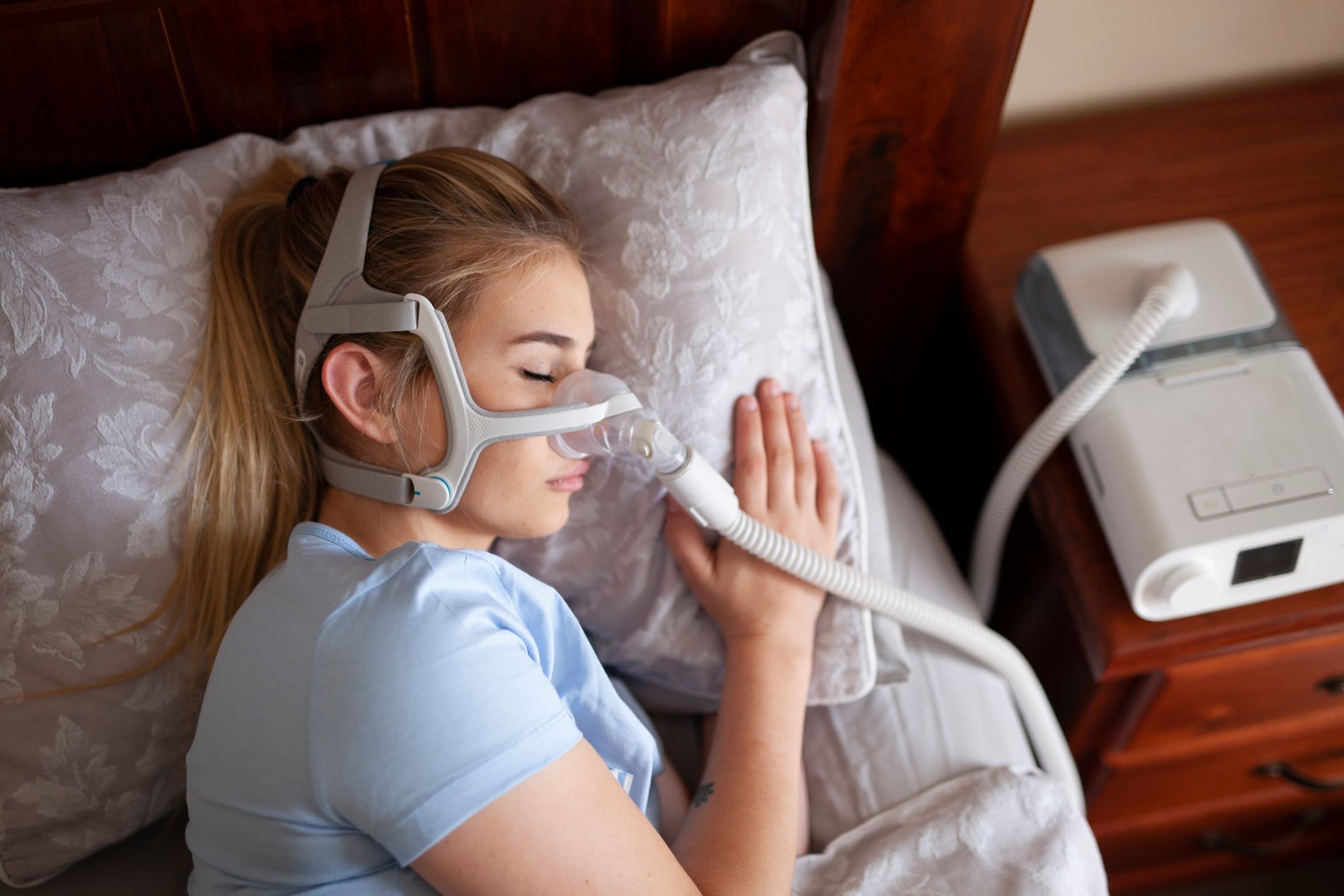
CPAP is the standard treatment for many people with moderate to severe OSA. It uses gentle air pressure through a mask to keep the airway open while you sleep.
Mandibular advancement devices
For some people, especially with mild to moderate OSA, an oral device can help by holding the lower jaw forward to keep the airway open.
Structured weight management
For some people, weight loss can meaningfully improve OSA severity and symptoms. If appropriate, medical weight management may be considered following clinician review.
Your journey to better sleep
Our Aberdeen Sleep Apnoea Clinic
A proper assessment.
Answer a short set of questions about your sleep. You get a clear next step based on your answers, including whether your symptoms point to sleep apnoea. If treatment is an option, a UK-registered clinician at The Independent Pharmacy reviews your full consultation before anything is prescribed.
Today

Get treatment working.
Settle into the right treatment for your level of risk, with support to make it stick and practical guidance on the habits that help your breathing at night. Fewer disturbed nights, less snoring, steadier energy.
Months 1–6

Make it stick.
Strengthen the habits that hold up long term. Learn your triggers, handle the occasional bad night with confidence, and keep the progress.
Months 7–12
What is COMISA?
When sleep apnoea and insomnia happen together
It's possible to have both insomnia (difficulty falling or staying asleep) and obstructive sleep apnoea (OSA) at the same time. This is known as COMISA (co-morbid insomnia and sleep apnoea). When both conditions are present, the right treatment matters. In many cases, possible sleep apnoea should be assessed and managed first, or alongside insomnia treatment, depending on clinical review.
That's why our Aberdeen sleep apnoea clinic screens for more than one sleep condition. Your answers are scored against validated tools so possible OSA is flagged first. If treatment is ever on the table, a clinician reviews your full consultation before anything is prescribed.
Aberdeen Sleep Apnoea Clinic FAQs
Obstructive sleep apnoea (OSA) is a condition where the throat narrows or closes during sleep, causing breathing to pause or become shallow. This can lower oxygen levels and repeatedly disturb sleep.
In some people, untreated OSA is linked with:
- excessive daytime sleepiness
- poor concentration and brain fog
- low mood and reduced energy
- high blood pressure
- increased driving risk if severe sleepiness is present
Not everyone has the same level of risk, which is why individual assessment is important.
No. Our online assessment is a screening tool, not a diagnosis. If your answers suggest possible OSA, a clinician will review your full assessment and NHS Summary Care Record to better understand your risk and advise on next steps, which may include a sleep study.
No. Some people with sleep apnoea feel very sleepy, but others mainly feel tired or unrefreshed. Daytime sleepiness is common but not universal.
No. Many people snore without having obstructive sleep apnoea (OSA). However, loud snoring combined with choking, gasping, or daytime sleepiness should be assessed.
Yes. Women with OSA may present with more subtle symptoms such as morning headaches, fatigue, low mood, or anxiety-type symptoms rather than obvious sleepiness.
OSA is more common in people who are overweight or obese, but it can affect people of any body size. Modest weight gain can worsen OSA risk in some people because extra tissue around the airway can make narrowing during sleep more likely.
Yes. This is called COMISA (co-morbid insomnia and sleep apnoea). Treating only one condition may leave symptoms unresolved, which is why proper assessment matters.
About the author

Suzannah Torres
RPSGT · AHCS Registered Clinical Physiologist
Suzannah Torres is a highly specialised respiratory sleep physiologist with over 20 years’ experience in NHS sleep and respiratory medicine. She is RPSGT certified and AHCS registered, with advanced expertise in sleep apnoea assessment, CPAP therapy, and complex respiratory sleep pathways.
Suzannah has worked across multiple NHS trusts, including Manchester University NHS Foundation Trust and Macclesfield District General Hospital. Her experience includes full polysomnography (PSG), home respiratory sleep testing, CPAP setup and compliance clinics, and managing patients with complex care needs. She has also led CPAP compliance pathways within NHS services.
Her approach is structured, evidence-based and patient-focused, ensuring accurate diagnosis and safe management of obstructive sleep apnoea and related respiratory sleep disorders.
- Professional registration
- AHCS (Academy for Healthcare Science)
- RPSGT (Registered Polysomnographic Technologist)
Medically reviewed
This page was last medically reviewed by Suzannah Torres on .

Suzannah Torres
RPSGT · AHCS Registered Clinical Physiologist
Aberdeen Sleep Clinic is committed to providing clear, accurate and evidence-based information about sleep health, insomnia, sleep apnoea and related conditions.
Our content is regularly reviewed and updated to reflect current UK clinical guidelines, including recommendations from NICE. All treatment pathways described on this website are subject to individual clinical assessment and review.
Read our editorial policy to see how our content is written, reviewed and kept up to date.